 Yosemite Park Tours from San Francisco
Best Time to Visit Yosemite
The best time to visit Yosemite depends on what you want to see. Waterfalls peak in May and June, summer brings the biggest crowds and the highest temperatures, and mid to late February offers the Horsetail Fall firefall with no reservation needed in 2026. This page works through each month from the point of view of a traveler starting in San Francisco, where every day tour runs 14 to 15 hours because Yosemite Valley sits about 195 miles away. You will find the month table, the waterfall calendar, the winter road rules, and which Yosemite tours from San Francisco suit which season.
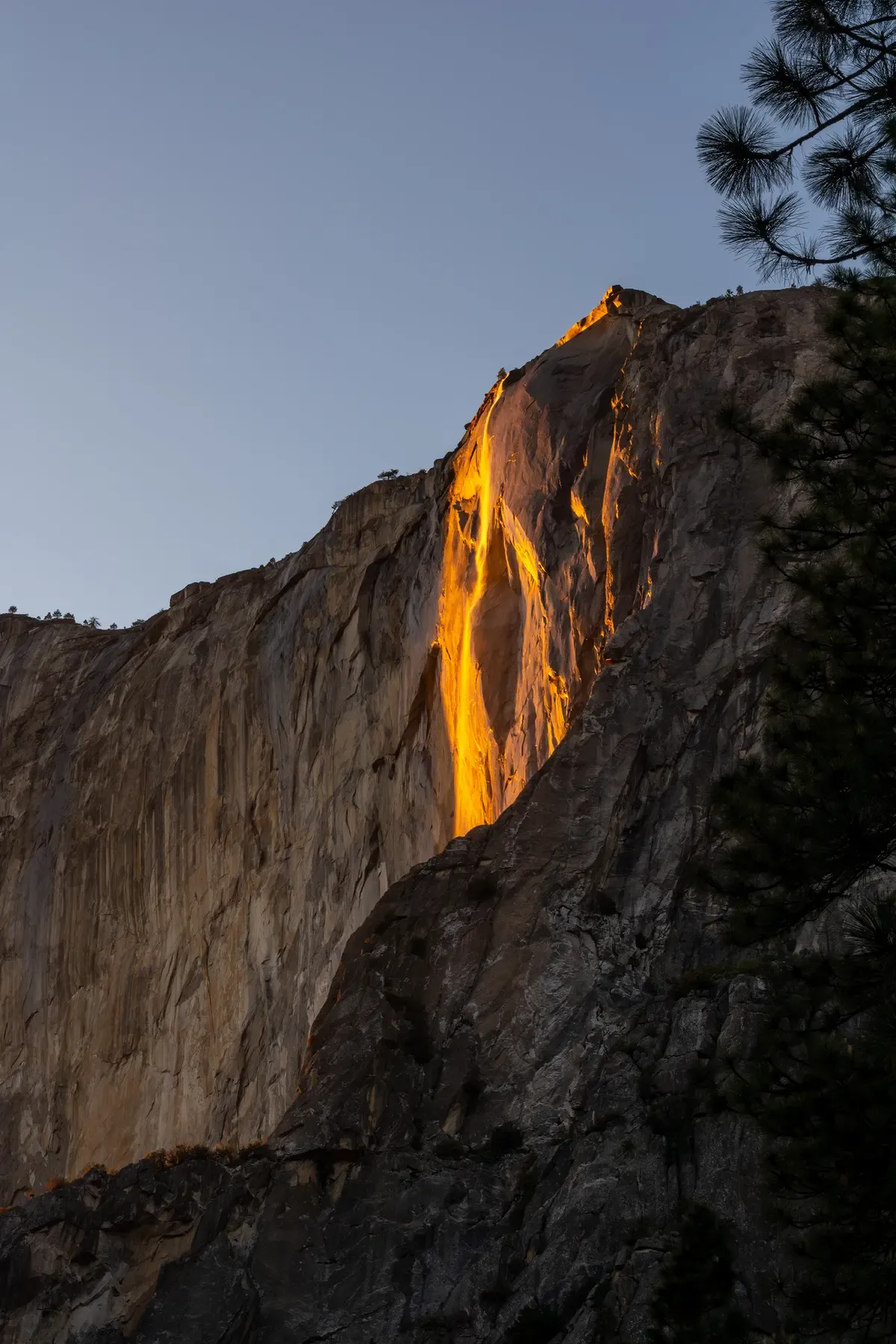
Horsetail Fall glowing orange for a few evenings in mid to late February, if flow and clear sky both line up. Photo: Matthew Dillon, CC BY 2.0, via Wikimedia Commons
Quick answer The short answer
For most travelers from San Francisco, the best time to visit Yosemite is May or June, when the waterfalls peak with snowmelt and the valley averages a high of 21 C (71 F) in May. July and August are the busiest and hottest months at 32 C (89 F), and Yosemite Falls is often dry by August. Winter suits travelers who want snow, chain controls and far fewer people, but Glacier Point Road and the high country close. The Horsetail Fall firefall in mid to late February needs clear skies and no reservation in 2026.
Key takeaways
- See the falls at full force in May or June on the Small Group Yosemite and Giant Sequoias Day Trip.
- Compare every departure month by month in the comparison table on the homepage.
- Traveling outside the United States? Read how the $100 nonresident fee is collected before you book.
- Want two days instead of one long one? The 2-day tour with lodging adds Glacier Point when the road is open.
Month by Month in Yosemite Valley
Yosemite Valley sits at about 4,000 feet, so its seasons run colder than San Francisco in winter and hotter in summer.
Average Temperatures in the Valley
The park service publishes average highs and lows for Yosemite Valley. The figures below are the ones given for the months that matter most to San Francisco day trippers, in Celsius with Fahrenheit in brackets. Months the park data does not list are marked as not stated. Note that the summer plateau is wide: July and August share the same 32 C (89 F) average high, which is why the two months feel interchangeable for heat and crowds. May is the sweet spot on paper, warm enough for a walk and cool enough for the 14 to 15 hour day a tour asks of you. January, at 9 C (48 F), is the coldest month the record covers and the one most likely to bring chain controls on the drive in.
Use the table as a starting point, not a promise. Mountain weather swings hard in a single day, and the approach roads from San Francisco climb well above the valley floor on the way in.
| Month | Average high | What it means for a day tour |
|---|---|---|
| January | 9 C (48 F) | Chain controls likely on the approach roads, shortest days, Yosemite Falls flowing |
| May | 21 C (71 F) | Waterfalls at peak snowmelt, long daylight, busiest spring month |
| July | 32 C (89 F) | Peak heat and peak crowds, lower falls starting to fade |
| August | 32 C (89 F) | Same heat as July, Yosemite Falls often a trickle or dry |
| October | 22 C (71 F) | Warm days, thinning crowds, waterfalls reduced |
| Other months | not stated | Pack does not list figures for February, March, April, June, September, November or December |
When the Park Charges Nothing to Enter
The standard entrance fee is $35 per private vehicle or $20 per person on foot or bike, and every tour on this site includes it for U.S. residents. On the park's fee-free days that charge disappears entirely for everyone. In 2026 the fee-free dates are 16 February, 25 May, 14 June, 3-5 July, 25 August, 17 September, 27 October and 11 November.
They line up with holiday weekends and late-season weekdays, so expect company even on the quietest of them. One caution: the $100 nonresident surcharge for visitors aged 16 and over who are not U.S. residents is a separate charge, and a fee-free day removes the standard fee, not the surcharge. The full breakdown is in the Yosemite nonresident fee guide.
Sources: NPS weather and NPS fees
Waterfalls: The Waterfall Calendar
Water is the single biggest reason to pick one month over another.
Peak Flow in May and June
Waterfalls peak in May and often stay strong into June as the winter snowpack melts. Yosemite Falls, at 2,425 feet one of the tallest in North America, flows roughly from November to July, then fades to a trickle or dries up entirely by August. That is the honest headline for summer planning: arrive in August expecting a bare cliff where the postcard shows a white ribbon.
Bridalveil Fall, at 620 feet, flows all year, as do Vernal, Nevada, Illilouette, Wapama and Chilnualna Falls, all reduced in late summer. If waterfalls are your reason for the trip, book a May or June departure such as the San Francisco: Yosemite National Park & Giant Sequoias Hike, which reaches the valley before the mid-morning crowds.
The Horsetail Fall Firefall in February
For about two weeks in mid to late February, on rare clear evenings, the setting sun lights Horsetail Fall orange above the eastern wall of the valley. The fall itself flows only from about December to April, and the effect needs water, clear skies and the right sun angle, so some evenings produce nothing. In 2026 the park does not require a reservation for the firefall period and manages parking and traffic in the valley in real time instead.
The viewing routine is fixed: park at the Yosemite Falls lot and walk 1.5 miles each way to the area near the El Capitan Picnic Area. Dress for a 9 C (48 F) average January-type evening, because February sits right beside it, and remember the day tours leave San Francisco before dawn, around 5:20 to 6:00 AM on the Extranomical departures.
Sources: NPS waterfalls and NPS Horsetail Fall
Yosemite Valley in Winter
What the valley looks like under snow. Third-party video by California Through My Lens. The site did not shoot it and has no relationship with the creator.
Winter: Snow, Chains and Short Days
From about November to March, winter changes what a Yosemite day trip from San Francisco can include.
Chain Controls on the Drive In
Chain controls are likely on the approach roads roughly from November to March. The park uses three levels: R1 requires chains except on two-wheel or four-wheel drive vehicles with snow tires, R2 requires them except on four-wheel or all-wheel drive with snow tires, and R3 puts chains on every vehicle. Highway 140, the route through Merced and the Arch Rock entrance, needs chains less often than Highways 120 and 41.
On a tour this is the operator's problem, not yours, but it can cost you: stops may be shortened or dropped when the roads slow down. The park also warns that GPS units do not always give accurate directions to Yosemite, which matters most in snow when you cannot improvise.
What Closes and What Stays
Winter trims the sight list. Glacier Point Road normally opens late May and closes around October or November, so from the first snows the overlook is out of reach until spring. Tioga Road, the 45.5-mile high route from Crane Flat to Tioga Pass, usually closes in November and reopens late May or June, and it is not on any San Francisco day tour in any case.
What survives is the valley itself: Tunnel View, El Capitan, Half Dome from Sentinel Bridge, and Bridalveil Fall, which flows all year. Yosemite Falls actually runs through the winter months, so a January visitor often sees more water than an August one. The sequoia stop is weather permitting on tours such as the Small Group Yosemite and Giant Sequoias Day Trip, and snow on the Tuolumne Grove trail can change or drop that walk in heavy winters.
Sources: NPS driving and NPS Tioga Road
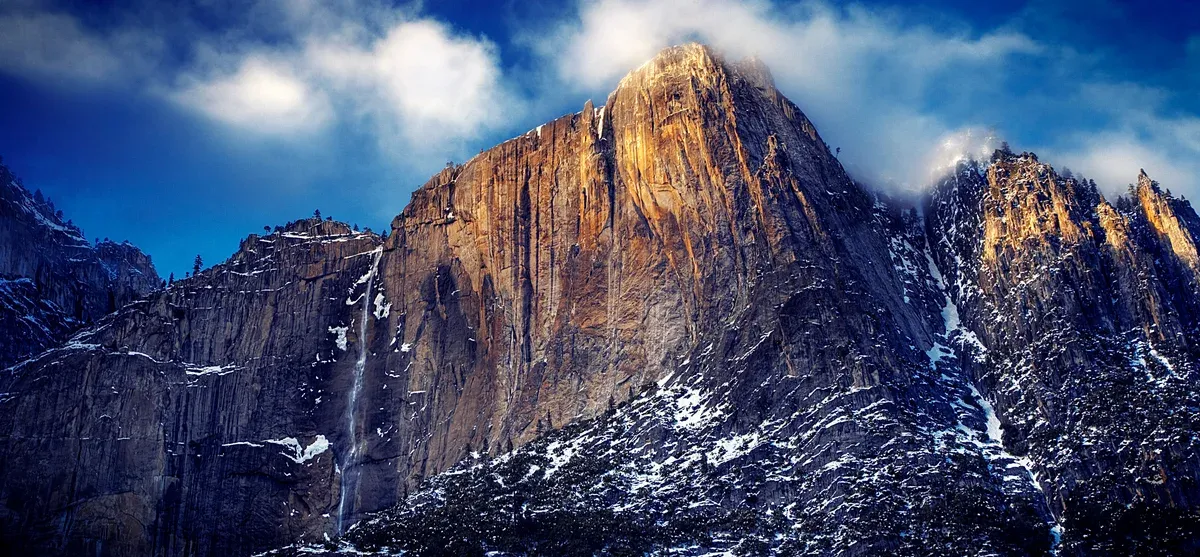
Snow on the cliffs above the valley, when Yosemite Falls slows to a thin ribbon of ice and water. Photo: Chase Lindberg, CC BY 2.0, via Wikimedia Commons
Glacier Point and the Shoulder Seasons
Two of Yosemite's high viewpoints live and die by the road calendar.
Glacier Point: Late May to October or November
Glacier Point stands 3,214 feet above Curry Village and looks across at Half Dome, Yosemite Falls, and Vernal and Nevada Falls in one sweep. Its road runs about 30 miles and roughly 1 hour from the valley and normally opens late May, closing in October or November. The road can shut at short notice: late in the 2026 season it closed for wildfire smoke and firefighting, which is why every listing that includes it says weather permitting.
Only some tours from San Francisco list Glacier Point at all: the 2-day tour with lodging at $629 and the private tour at $1,200. If Glacier Point is the whole reason you picked your month, go between late May and October and accept that fire season at the end of that window adds risk.
Smoke Late in the Season
Wildfire smoke is the variable no month table can capture. Late in the 2026 season it shut Glacier Point Road and brought 15-minute weekday delays on Big Oak Flat Road between Foresta and Crane Flat, while Tioga Road ran with construction delays and no overnight parking from 15 October. The park conditions page is the only reliable check, and conditions change often.
The practical read for trip planning is this: June is usually cleaner air than September, and any late-summer booking should come with a cancellation window. Every day tour on this site offers free cancellation 24 hours ahead, except the 2-day lodging tour at 6 days.
Sources: NPS Glacier Point and NPS conditions
Which Tour Suits Which Month
Every month on this page pairs with a different tour. This section compares what the San Francisco operators charge and include, so you can match your month to a departure without re-reading every listing. All figures come from the tour listings.
Price and Inclusions by Tour
The table lists each tour's price, length, season-relevant features, and what a non-U.S. resident aged 16 or older should expect to add. The $100 nonresident park fee is not in the listed price on any group tour: operators collect it through a payment link after booking, on the bus, or at the destination, and Gray Line lists its government fee at $103. Only the private tour folds the nonresident fee into its own price.
A holder of the $250 America the Beautiful non-resident annual pass does not pay it, and the pass covers up to 4 people traveling together.
| Tour | Price | Length | Glacier Point | Nonresident fee on top |
|---|---|---|---|---|
| Small Group Yosemite and Giant Sequoias Day Trip | $239 | 14 hours | No | May apply, collected in person |
| Yosemite and Giant Sequoias Hike | $224 | 15 hours | No | $100, payment link or on the bus |
| Day Trip to Yosemite National Park | $219 | 15 hours | No | May apply, amount not stated |
| Full Day Tour from San Francisco | $199 | 14 hours | No | $103 at the destination |
| Yosemite and Giant Sequoias Small Group Tour | $229 | 14 hours | No | May apply, amount not stated |
| 2-Day Tour with Lodging | $629 | 2 days | Yes, weather permitting | About $100 at the destination |
| 2-Day Guided Trip with Pickup | $251 | 2 days | No | Not stated on the listing |
| 3-Day Tour Without Accommodation | $251 | 3 days | No | $100, payment link or on the bus |
| Private Tour | $1,200 | 14-15 hours | Yes, weather permitting | None, the operator covers it |
Matching Month to Tour
In May and June, when the falls run hardest, a sequoia-plus-valley day works well, and the small-group format keeps the stops short at the crowded overlooks. In July and August, when Yosemite Falls is fading, the From San Francisco: Day Trip to Yosemite National Park still gives 3 hours of free time near the base of the falls and a 1.5-hour narrated valley drive, and its $199 price is the lowest on the site. In winter, when daylight is short, an early-bird departure matters more: the Extranomical day tour picks up between 5:20 and 6:00 AM specifically to reach Tunnel View before the crowds.
For a February firefall evening, no listed day tour returns late enough to see the sunset effect, so treat the firefall as a self-drive or overnight trip, or look at the 2-day options. For any month, a two-day format such as the 2-day tour with lodging removes one of the two 4 to 5 hour drives and adds Glacier Point between late May and October.
Sources: tour listings and NPS fees
Which Month Is Right for You
A quick match between your priority and the calendar.
If You want the waterfalls at full force
Go in May or June. Yosemite Falls runs until about July and peaks with the May snowmelt. Any valley day tour works, and the Small Group Yosemite and Giant Sequoias Day Trip at $239 covers Bridalveil Fall, Tunnel View, El Capitan and Yosemite Falls in one day.
If You want the Horsetail Fall firefall
Go in mid to late February and plan around the sunset, not a day tour schedule. Park at the Yosemite Falls lot and walk 1.5 miles each way. No reservation is needed in 2026. Read the logistics on the San Francisco to Yosemite page first.
If You want Glacier Point
Go between late May and October or November, and only book a tour that lists it: the 2-day tour with lodging or the private tour. Both say weather permitting, and fire can close the road late in the season.
If You hate crowds and heat
Go in October, with an average high of 22 C (71 F) and thinner crowds, or in winter. Accept reduced waterfalls and, in winter, chain controls from November to March.
If You are not a U.S. resident
Budget an extra $100 per person aged 16 and over on top of your tour price, unless you hold the $250 America the Beautiful non-resident pass. The full tour-by-tour breakdown is in the Yosemite nonresident fee guide.
If You want to stay over instead of doing both 4-5 hour drives in one day
Any month works, but park rooms book up to 366 days ahead. Compare The Ahwahnee, Yosemite Valley Lodge, Curry Village and the El Portal lodges in the where to stay in Yosemite guide.
Best Time to Visit Yosemite: Questions
Which month is best to visit Yosemite?
May is the best single month for most visitors: waterfalls peak with the snowmelt, and the valley averages a high of 21 C (71 F). June runs the falls almost as hard with more warmth.
When should I not go to Yosemite?
Late August is the weakest month for a first visit: the average high matches July at 32 C (89 F), crowds peak, and Yosemite Falls is often a trickle or dry. Late in the fire season smoke can close roads such as Glacier Point Road, as it did late in the 2026 season. The page on is a Yosemite day trip worth it covers how the season changes the value of a single day.
Do I need a reservation to see the firefall in 2026?
No. Yosemite does not require a vehicle or timed-entry reservation in 2026, including for the February Horsetail Fall period, and the park manages valley parking and traffic in real time. Expect a 1.5-mile walk each way from the Yosemite Falls lot to the viewing area near the El Capitan Picnic Area.
Is Yosemite worth visiting in winter?
It is worth it if you want snow, quiet and Yosemite Falls running, but you lose Glacier Point Road and Tioga Road, and chain controls are likely from about November to March. The valley sights, Tunnel View, El Capitan and Bridalveil Fall all stay. Winter driving options from the city are on the San Francisco to Yosemite page.
How many days do I need in Yosemite?
One day gives you about 4.5 to 5 hours in the park on a day tour, because the drive is 4 to 5 hours each way over about 195 miles. Two days let you split the driving with an overnight and add Glacier Point, which is what the 2-day tour with lodging at $629 builds in. Three days add a fully free middle day on the 3-day tour.
When is the best time to see the giant sequoias?
Tuolumne Grove, the grove every San Francisco day tour uses, is reachable whenever the Highway 120 corridor is open, though the 2.5-mile round trip walk with 500 feet of elevation change is weather permitting in snow. Mariposa Grove, home of the 2,995-year-old Grizzly Giant, runs a free shuttle from late April through November. No listed tour visits it. Details are in the guide to the giant sequoias in Yosemite.
Are there days when Yosemite is free to enter?
Yes. The 2026 fee-free days are 16 February, 25 May, 14 June, 3-5 July, 25 August, 17 September, 27 October and 11 November. The standard fee of $35 per vehicle disappears on those dates, but the $100 surcharge for non-U.S. residents aged 16 and over is separate and still applies unless you hold the $250 non-resident pass.